Woo Hoo! The Relic Hunter Universe is expanding this year!
Not only is Ancient Magic: Relic Hunter Book 7 about to go to editing, but the first book in the Sand Fire Series, Obsidian Shadows, will hopefully be out in the fall!
That’s pretty exciting for me because I’ve long struggled with finding the time to write, and then once I had the time, struggling to shut up the little voice that constantly nags “but you’re not writing” while I’m doing those things that are “life” (washing dishes, doing laundry, playing with the dog! That voice is relentless!).
So – stay tuned for cover reveals – announcements about pre-order discount windows – and other news from my office! Happy New Year, and thank you for taking this journey with me!
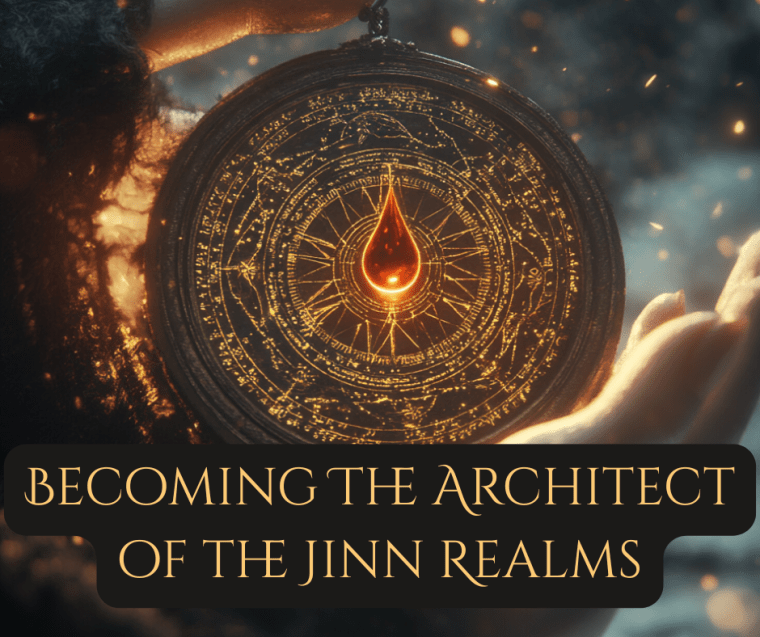
When I first started imagining the jinn realms, I didn’t want to lean purely on folklore because if jinn were around in the time of Alexander the Great (as they were), then surely they would have evolved just as much as the human world did, right?
I love legend as much as the next fantasy writer, but I also love grounding my magic in something that feels like it could be real if the stars aligned, and well, magic really was running rampant. Enter science – the salvation and bane of my existence.
So – trick question – what’s abundant in the regions traditionally associated with jinn? Sand. Endless, shimmering, heat-blasted sand. And camels, but more on those in a later post.
Sand means silica, and silica has hi-tech potential. Years ago, I saw this video, and sometimes a spark of inspiration isn’t recognized as such until SUDDENLY IT IS! I had the seed of a civilization whose technology wasn’t based on metal or electricity, but on heat-shaped glass, crystalline structures, and silica-based energy systems. A world built from the very substance that humans have access to as well, but the jinn are way ahead of us. I wanted the world to feel familiar and possible, and glass gives me that.
The next question was: Keep the flying carpets?
Of course, when you’re drawing inspiration from a region filled with deep folklore, you bump into those classic motifs: Flying carpets. Bottled spirits. Mischievous wish-granters. I’ve already accounted for the last two, but those carpets were a hurdle…because some legends slide naturally into a fantasy world and others…can feel trite.
But that’s what fantasy writers do. We make those hard decisions: Keep what readers expect, or let it go if it doesn’t serve the story?
Flying carpets have a certain charm — portable, whimsical, and instantly recognizable. But in a silica-tech world? Did they fit? Would they feel too easy? Too literal?
Then I realized something that Pops has told Ari dozens of times:
Stories don’t appear out of nowhere. They’re rooted in some real observation, however distorted.
Which got me wondering…
What If the Flying Carpet Myth Started With the Jinn Themselves?
Maybe humans glimpsed something extraordinary and explained it the best way they could.
A distant shimmer. A figure gliding over the desert. The mirage-like wave of dunes moving under something that shouldn’t have been able to move that way.
“Flying carpet,” they might have said, because what else is flexible enough to float and glide over terrain?
But what if they weren’t flying? What if they were surfing?
Not on water, but on sand. Using what was available because of their magic and affinity with fire?
Suddenly, the origin of the flying carpet makes perfect sense (if you can get over that whole magic thing – which I have no problem doing). Remember – magic was once the default answer for anything that didn’t make sense!
Humans saw a silhouette moving across dunes fast and smooth enough to defy belief. Imaginations did what imaginations do – related it to something familiar (carpet) and then it got a little magical glow up – poof! – genies on flying carpets!
Science + Myth = My Favorite Kind of Magic
At the end of the day, that’s the sweet spot for me in worldbuilding: the place where science deepens myth rather than replaces it – and somehow makes everything seem possible.
It’s also pretty cool that I can make surfing jinn a thing.
I was that kid in elementary school who couldn’t wait for the Mythology Unit to come around. In fact, Apollo was perhaps my first crush, or maybe it was Justin from The Secret of N.I.M.H. It was a long time ago.
But just because I’m a bit fuzzy on the timeline doesn’t mean those two things didn’t leave an enormous impact on my life. My fascination with mythology has always been present, carrying me from Mount Olympus to Joseph Campbell and the archetypes of Carl Jung. These days, I usually begin a book with a specific geographic region in mind. Then I’m off on a hunt for myths and legends that might make for an interesting adventure for my main character in the Relic Hunter Series.
When I first started writing, I set my story in familiar territory to me: the Jersey Pines. Being a Jersey girl made the location feel personal, but I still needed a reason to send a disgruntled archaeologist desperate for a fresh start wandering through the Pines. I had a vague notion about healing trees, so I went searching for more information, knowing I wanted to ground my stories in legends. I often say that I use the setting and the mythology as the structure to hang my characters on, and that’s as true today as it was the first time I flipped open my laptop.
I don’t always stay true to the legends. That’s one of the benefits of being a fantasy writer. I want the stories to feel familiar enough to make readers feel at home, but I twist most of the myths just enough to give my characters better angles to grow from. The Pines and the Native American tribes who lived there gave rise to the inclusion of Coyote in my first book. And I have to admit, I’ve let him drive the narrative as much as Arienne has. He’s mythical, legendary, and just human enough to make reviewers keep mentioning him. Coyote was the structure from which Kai blossomed.
The Relic Hunter Series travels the world now, but honestly, I could have stayed in New Jersey forever. Every country’s mythology is rich and varied, overflowing with transformative stories deeply rooted in culture, geography, and worldview. There’s no shortage of inspiration for anyone willing to dig – and I just happen to love the digging.
At the heart of it all, myths give me a place to start. They’re the skeleton of the story that I can bend, shape, and sometimes completely twist to fit the characters who show up demanding space on the page. They’re ancient, familiar, and endlessly surprising, and they let me explore the world one legend at a time. And those legends have led me to dig deeper, and what I’ve found is a vast common ground that so many cultures share. But that’s a discovery for a future post.
Truthfully, I wanted to blow something up, metaphorically speaking. I wanted a big, magical explosion, and then I wanted to see what my characters did with it. I could have chosen any location, but I picked one with the power to transport you anywhere: from the depths of the sea to the far reaches of space, and everywhere in between: a library.
Okay, so a magical library where the possibilities for great adventures are increased a million-fold. But rather than destroying it, I wanted to trap people. People I care about. People I enjoy writing into existence. But I wanted to write them out of existence and send them NOWHERE.
That’s how Shattered Magic began. It was my opening scene from day one: a library. A catastrophe. Chaos. And poof! my trapped characters were lost.
And then… I was equally lost. The book stopped cold. It simmered in the back of my brain for months. I tried to dissuade myself, tried to pick a new opener, but it didn’t feel right. I loved it, my folded library too much to give up. So I let the story sit, as I usually do. And the answer to my literary dilemma came from a WhyFiles YouTube video on liminal spaces.
And we were off.
I didn’t invent the concept, but when I discovered it, it was like the universe was smacking me over the head, begging me to use it. So I did a deep dive into liminal spaces – airports, train stations, doorways, even elevators – and discovered that between here and there lies a place that’s both and neither. A place where you’re waiting to move on. Where possibilities are everywhere. These spaces aren’t meant to be inhabited long-term; they’re transitional, designed for waiting until you move on to your next destination.
There’s a long history of lore about liminal spaces, too. In ancient times, people buried small protective figures beneath doorways to keep evil spirits from slipping through, because they believed all liminal spaces had the potential to let anything through, and it’s better to guard against trouble than try to get rid of it.
And yes, there’s a disorienting feeling to being in one of these places for too long. Time seems suspended because, rather than being present where you are, you’re anticipating moving on. Think of a snowed-in airport – nobody’s supposed to be sleeping on the floor, and I’m pretty sure nobody gets quality rest when they have to do that – but all of those people are trapped between where they came from and where they’re going. And airports, train stations, and other liminal spaces aren’t designed for long-term occupation.
Psychologists describe liminal spaces as places of transformation, uncertainty, and possibility. Perfect for fantasy, right? So that library explosion turned into a journey through liminal spaces that forced my characters to grow. By trapping them in a place that’s neither here nor there, I could explore who they are when the world goes sideways. Chaos became possibility, fear became personal, and a simple “what/when” question – what happens to people when they’re trapped nowhere for too long? – turned into a story about choices, courage, and the quirks of the people I love to put on the page.
Here’s another honest fact that didn’t occur to me until I was writing this post: I was in my own liminal space while I finished that book. Caught between the career I left and the one I was starting. Sometimes, the in-between is exactly where you want to be, and sometimes serendipity sneaks up on you.
I’ve spent this month knee-deep in the Jinn Realms and unexpectedly discovered why I almost never finish high-fantasy novels.
As you might know, I usually write contemporary fantasy (“low fantasy”), where the magical world is familiar and I don’t have to re-invent physics just to get Ari through a doorway. But the next Relic Hunter book takes us into Egypt, and that’s where Sidaffri can slip back home and orchestrate our first adventure in the Sand Fire series.
And when Sidaffri’s sister kidnapped us, I had to start describing the Jinn Realm.
At first, I did what any history geek would do: I dove into ancient lore from the surrounding region, conveniently tucking the gateway to Na’har somewhere near Egypt. That research was fun, but as research generally does, it began multiplying.
Place names. Magical systems. Cultural structures. Mythic hierarchies. Suddenly, I had a cheat sheet to help me remember my own notes.
Which is when I realized something important:
That’s EXACTLY why I rarely make it through a high-fantasy book.
So… I U-turned.
The second draft (which is technically still a first draft) is cleaner, lighter, and far more “me.” I’ve been listening to Brandon Sanderson’s brilliant lectures on worldbuilding, and while some writers have the patience to spend years constructing a universe, I absolutely do not. I admire that level of detail from a respectful distance – with a cup of coffee and no pressure to write that sort of book.
For me, the Jinn Realms need to stay familiar, with just enough magic to twist reality in fun ways without requiring a glossary. And technology – because when the realms divided, the jinn certainly didn’t stay stuck in the dark-ages. Think sunlit sandstone archways in Na’har with cool tech that makes life better in the desert.
The goal is simple:
Names you can remember.
Magic that feels exciting, not exhausting.
A world that sweeps you in without ever making you feel lost.
It’s been more challenging than I expected. But challenge usually means growth, and this world has definitely made me a sharper writer. Everything I add has to serve double-duty: deepen the world and push the story forward. If it doesn’t, it gets cut.
(And yes, there’s been a lot of cutting.)
But all that trimming is so I can deliver a book you’ll disappear into without actually getting lost.
In my next post, I’ll bring you into Na’har and introduce you to the Court of the Enira – Balsara, Sidaffri’s sister and queen of the Jinn. There’s one reveal in particular that made me smile and think, “Oh. So that’s who she really is.”
And keep an eye on my sidebar and Instagram because I’ll be sharing some Jinn-Realm eye candy very soon.
Interview With My Muse: The Woman Who Hijacks My YouTube History
Interviewer (Me): Thank you for agreeing to this interview. You’ve been lurking in my creative process for… what, several years now?
Muse:Decades, darling. I’ve been around longer than your browser history. You simply didn’t notice me until you started researching where that pesky sword could have gone to.Now, you’re looking for entire armies! You’ve certainly branched out.
Interviewer: Yes, about that. I’ve been meaning to talk to you about the way you hijack my YouTube recommendations lately. Last week you sent me from “10-Minute Yoga for Tight Shoulders” to a three-hour documentary the lost army of Cambyses.
Muse:And you’re welcome. The shoulder tension was emotional. Your protagonist needed to get grounded in the myths. If you don’t know where they start, how can you possibly track them through all of those shifting dunes?
Interviewer: You also interrupted my grocery shopping to insist I watch that Egyptian Magic lecture in the parking lot.
Muse:You didn’t even remember to bring a grocery list, so you were just begging for an excuse. Besides, you only really need bananas and coffee, and you can’t expect inspiration to wait for wi-fi.
Interviewer: Since my readers haven’t met you yet, how would you describe yourself?
Muse:Oh, I do hate labels, but for you, darling, I’ll try. I’m the kind of person who always smells faintly of sandalwood and old books. I take my cues from the world at large, sampling all of the history and characters that have walked the timelines, never ruling out an interesting conversation with anyone who happens by. You never know when you’ll stumble on a bored coyote looking for a new partner and an adventure.
Interviewer: That… is scary accurate. How did you get assigned to me?
Muse:Assigned? Darling, I chose you. I saw someone who loves history, mythology, and pretending they’re “just going to skim one article.” You were ripe for a different path, and it worked – but you did take your time making the commitment, didn’t you?
Interviewer: I had obligations. What would you say is your main job?
Muse:To nudge you. To whisper. To drag you by the sleeve into the deep end of research when you thought you were just checking your email. To point out the archaeological footnote you almost ignored. To insist that you write stories with bones in them; stories rooted in real people who lived and dreamed long before you found their memories.
Interviewer: I’ve noticed you usually work at inconvenient hours.
Muse:Inspiration is a feral creature; it does not obey office hours – and you should be one to talk! The neighbors are talking darling, they see your lights on at four a.m..
Interviewer: Do you ever think about giving me a heads-up before you strike?
Muse:Absolutely not. Where’s the fun in that? Besides, your best ideas arrive when you’re trying to do something sensible and ordinary, like sleep.
Interviewer: One last question: any message for my readers?
Muse:Treat history like a mirror, mythology like a map, and your imagination like a half-wild garden – don’t weed it too soon because something interesting might bloom. And if your YouTube history suddenly develops an obsession with ancient irrigation systems… (smiles) …you’re welcome.
I know I need to market. But marketing for indie authors like me is a life of keywords, spreadsheets, and acronyms like CTR and CCP – and that just makes my brain hurt. I try. Really.
But I spend a day analyzing, creating, posting – and PAYING – and then all I’ve done is create MORE work for myself because the following week, I get to “look at the data” and do it all over again. A day of marketing is not only unpleasant for me, but it sucks time out of my writing. Let me tell you about my marketing journey and why I’m choosing NOT to market at this point (much to the detriment of my bottom line).
When I started this full-time writing career, I had visions of working for myself, publishing on a regular basis – and once Shattered Magic was out in the world, I turned my attention to my biggest failure – marketing.
I’m terrible at it. I’ve tried TikTok and Pinterest, I run ads, and I’m pretty reliable at posting on Instagram – but all that time is a swing and a miss in terms of moving books. When I sit down to look at the data, I feel like a total failure—and that mindset affects my productivity as a writer.
So when I made the switch to authorhood, I found someone whose work in book marketing I respect and admire – someone I love to watch and whose advice I trust – and I signed up for a course. I worked that course to the best of my ability – but as much as I loved the creator, I just couldn’t get excited – so I plodded through lessons and homework and webinars for a full 30 days and guess what happened to my next book?
Nothing.
And by nothing I mean I didn’t write a single sentence in 30 days. I just couldn’t. I was so frazzled and beat down by the marketing stuff that I had zero left to give my books.
That 30 days cost me 90 days of writing because I was so discouraged and defeated I had zero joy left for my craft.
Zero, people!
But the stress-quotient was off the charts! My writing space became a place I actively avoided, rather than a place I ran to for refuge.
I could tell because my desk was obsessively clean. Things were filed. Things were labeled. My fancy gold binder clips sparkled while keeping my marketing plan, task lists, and keyword notes all neatly contained. And my computer folders were labeled with spreadsheets, comp authors, and data, data, data.
The clean desk was a sign I was in deep trouble.
It was not the course creator’s fault. That person is amazing. It is a matter of temperament – MY temperament.
A temperament that was cultivated over years of doing exactly that sort of data-driven, spreadsheet-based work in an entirely different profession. A profession I left to write books.
So, I dropped the course. Then I did 60 days of “marketing detox” and realized something: I can spend days writing ad copy and get ZERO joy, or I can spend days writing new adventures. If they sell – great – but I’m not going to sell anything if I can’t write – and if marketing kills writing then I need to banish marketing.
Maybe this will change, but for now, my goal is words on a page. Not ads in a folder – and my binder clips? Safely stored in my desk where they can’t trigger me.
We’re getting closer to the release of the latest adventure in the Relic Hunter Series. As my newsletter subscribers know, I’ve taken this adventure to a whole new area of the world – or should I say to an Ancient area? Either way, it will be a fun ride with lots of tension, twists, and turns – and yes, a lot of snappy dialogue and fun scenes!
So for those of you who are into the history behind my adventures, a bunch of new links are coming soon for some added bonus content. I’ll post those in the VIP section after reviewing them again. So stay tuned! We will have a lot of fun in the next few months!
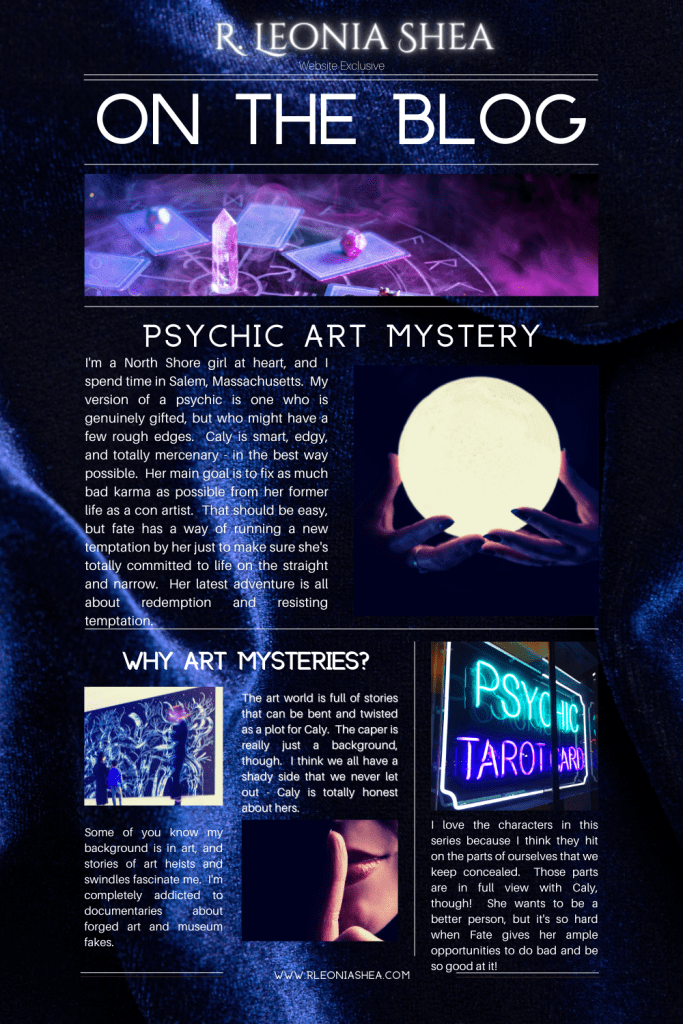
It’s good to change things up every once in a while – as much as I love writing fantasy adventures, sometimes it’s nice to write a character-driven tale. That’s where Caly comes in for me. She’s all about fixing some bad karma from her shady past as a con artist – but she’s not sunshine and roses. While Ari might usually believe in the best possible outcome, Caly’s more inclined to hedge her bets.
The Fortunes series takes place in one of my favorite places in the world, Salem, Massachusetts. As a North Shore girl, I wanted to pay homage to the fun and quirky vibe of that town. I love going there, no matter the time of year! I do admit that I tend to steer clear during October, though – crowds aren’t really my thing.
This series allowed me to combine several things I’m interested in. In addition to the location, I centered the first two stories around art. I’ll confess, the third one will touch on that as well – but after that, Caly might have some new clients to help.
I’m also impressed by good tarot card readers. Growing up, my mom had a friend who read cards – and she was scary accurate at times. Intuition is something that I always listen to; if I have a feeling about something, it’s hard to get me to change my mind. I think we listen to our intuition more than we’d care to admit – so Caly owns it for all of us!
These are light, fun mysteries along the lines of the TV show Leverage. Caly’s a con artist using her shady skills to help people who need a way out that doesn’t involve the police. Her supporting characters are ordinary people, but every once in a while, Ari walks by her on the street, or Caly stands in line to get coffee behind Gray. I think the fantastic and the mundane exist side by side – both in real life and fiction. That’s the only connection between the two series (except for a walk-on by another character which I can’t mention because it might be a spoiler). This is a fast-talking, heist crime sort of series, and I love crafting the adventures of yet another smart, strong heroine who’s not a young adult.
For subscribers to my email list, you might see a survey asking if you want to beta read for one series or the other (or both!). The beauty of multiple series means there are choices – and some days it’s nice to escape into magic, and others, it’s nice to get snarky just because I can.
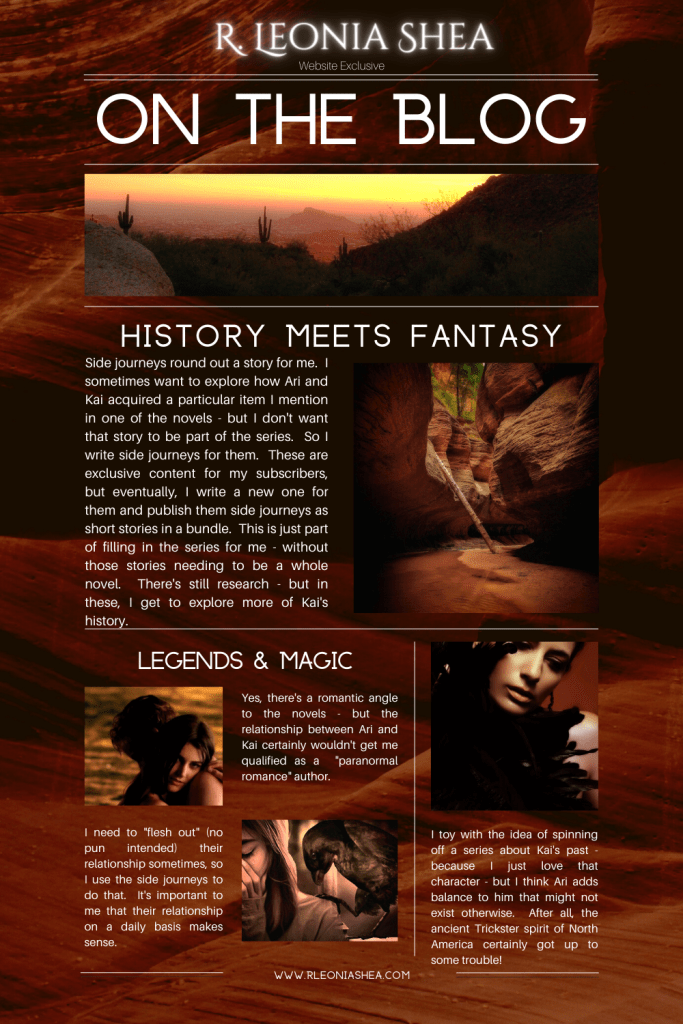
Writing the series and having my characters interact while working on a novel is one thing, but sometimes other things need clarification. For example, every once in a while, I need to create an artifact that Ari has received from Kai – but I don’t want to go into the story in the current novel. Enter the side journey – a nifty little way that I can flesh out the item’s acquisition while also creating content for my VIP readers.
It’s almost like a bonus for me! I love to write, but I don’t want to craft novels whenever an idea pops into my head. Using these side journeys to flesh out a character or “find” a relic is a fun way for me to develop a back story – and keep developing the relationships between the characters without a 90,000-word count staring me down.
For the Polestar (the relic from Resistant Magic), I send Kai and Ari on a little working vacation to the desert southwest. They managed to find a relic, and I had fun playing with two other Native American spirits – Iketome and Raven. It was a fun project, and let me write a little Paranormal Romance angle for Ari and Kai.
I don’t mind the rabbit holes, but I don’t have time for such frivolity when I’m working on a novel. It’s nose to the grindstone and research aplenty to get one of the Relic Hunter books done. That’s not saying I don’t make notes about the side journeys I intend to create. I write myself a brief reminder and return to it when I’m between books – which isn’t often enough! So as I work on Ancient Magic, subscribers to my VIP list can anticipate a new side journey after the release.
While I’m on the subject, I plan to spin two books off the Relic Hunter novels. In the first, Princess Tyballa Nessinger will be trying to solve the mystery of Dr. Ezra Froelich’s memory problems. I alluded to this in Jealous Magic, but I’m interested to see where Ty goes, and I’d also like to get to know her better.
The second is Sidaffri’s turn to go home and find what happened to the Sand Fire Jinn. This one will take some time because I’ll spin this off from Ancient Magic (the next book’s working title). There’s more to learn about Sidaffri and her history, and I’m passionate about getting the character’s backstory right.
The one character I probably won’t write a back story for is Kai, though. I’m not sure I want to know what he was up to before appearing in Elementary Magic. If you read the legends about Coyote, they’re rather naughty.





 R. Leonia Shea